john h hanzl (author)
official site

A Tale of a Really Bad Dive – Part 4
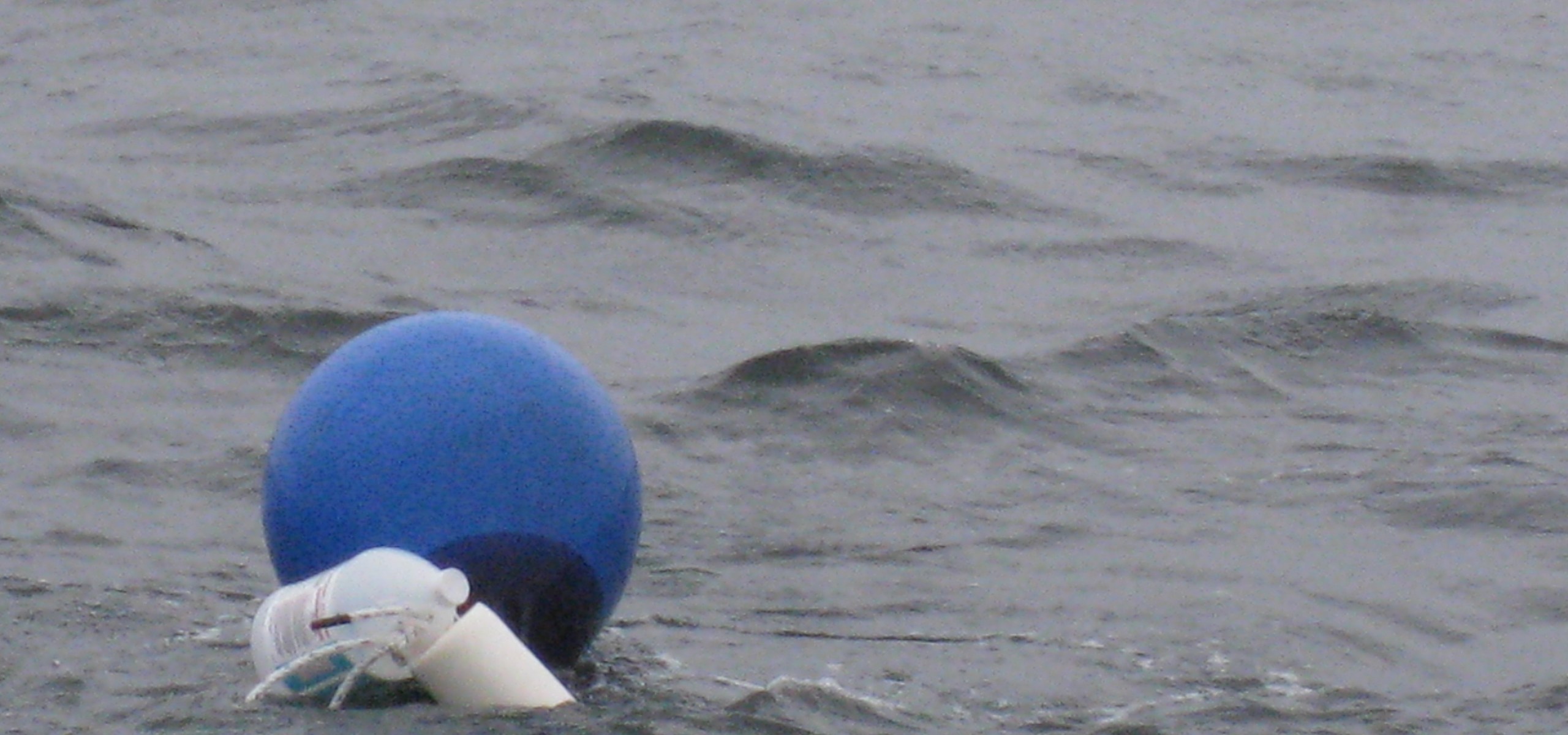
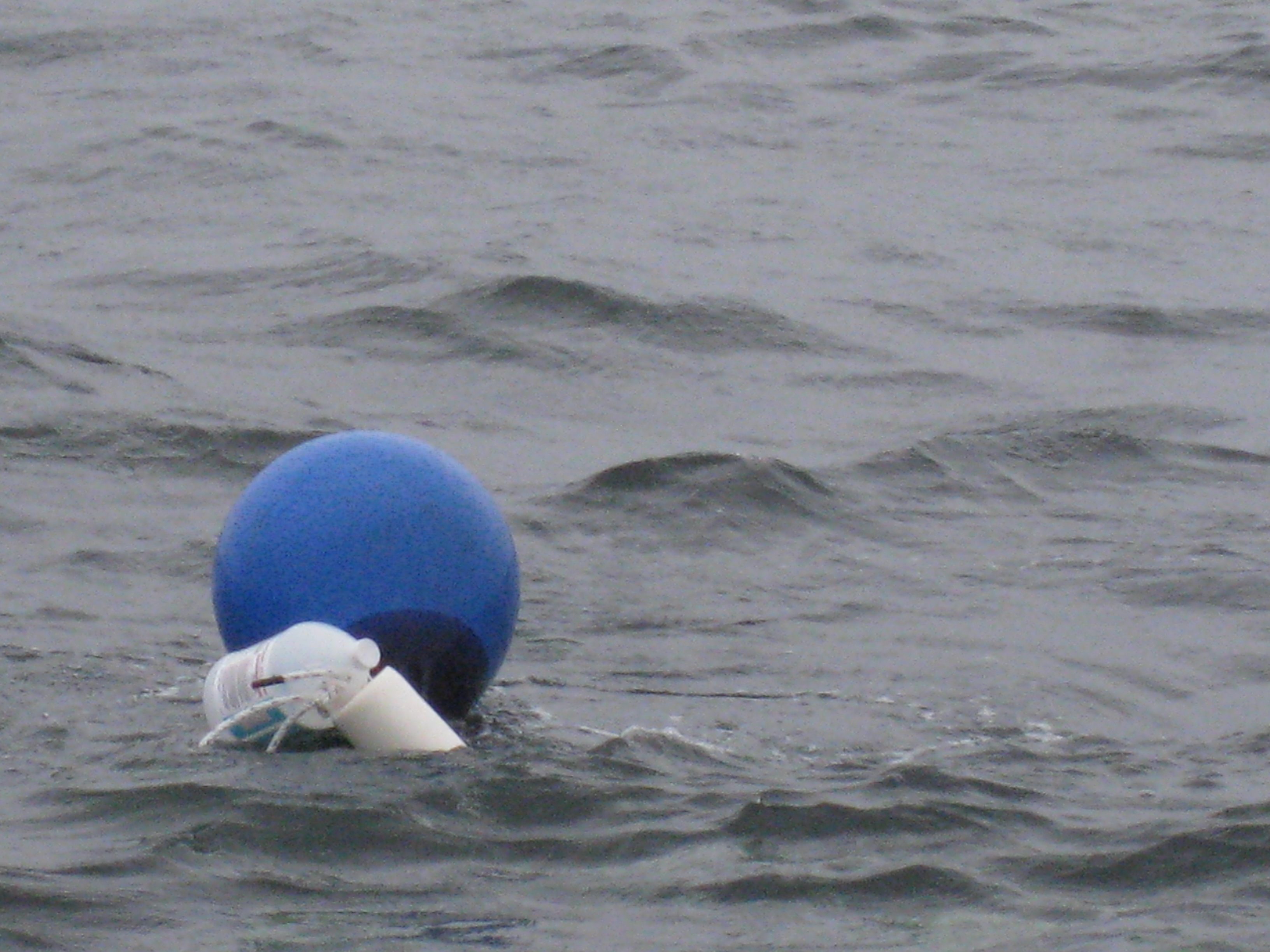
First off – If you’re new here, you may want to start at the beginning:
All right – welcome back. All this talk and I don’t think there’s been any actual diving yet.
Let me take a quick peek (checks notes).
Nope, no diving. Let’s fix that…
With the dropline set and, with any luck somewhere near the pop-up, it was go time. I gathered the team for a final dive plan review before Michael and I kitted up.
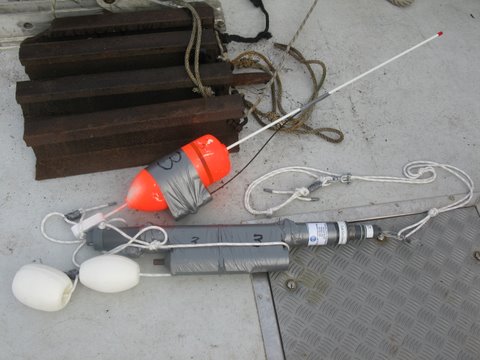
In decompression diving everything needs to be timed to the minute, as both gas consumption and deco obligation exponentially raises at such deep working depths. Hence everything needs to be thought of, and rehearsed, prior to the dive – and contingencies need to be built in in case the dive goes pear shaped. So the plan is everything.
The Plan…
– Drop in the water breathing my travel mix in the small tank hitched to my lift hip and swim over to the turkey ball, where we will meet up and do a final gear check.
– I am lead for the dive with Michael as secondary – so I’ll run down the line first.
– Quick descent along the line to 30′ where we switch from travel mix to back gas (hypoxic trimix) and do an S-Drill (a 360 degree buddy leak check and test breathing off the backup regulator on the twinset).
– I only allotted four minutes for the descent from the S Drill point to the bottom some 280′ down. That’s fast but manageable – and the gas consumption clock would now be ticking
– Regroup at the in-line float at 220′, which has us at 60′ off the bottom, before the final push.
– We only have 14 minutes allotted on the bottom for all activities. At 280′ we’re breathing our gas supply at a rate of nine times what we would be breathing at the surface, so we’ll be sucking the tanks down fast.
– Once at the bottom I’ll unstow the lift bag attached to the anchor and give it about a 1/3 fill. This is to aid in the retrieval of the dropline after the dive – as while the line is hauled up ambient pressure reduces and the bag fills, giving increasing lift to the anchor – but not too much to inadvertently send the anchor – and our lifeline – to the surface. That would be very bad.
– Michael will attach his strobe to anchor shank – this will be our reference beacon.
– I’ll hook up a hundred foot reel of line to the anchor. This is our search line for radial patterns around the anchor. Again – pitch black and a silt bottom – the dropline is life, never disconnect yourself from the dropline…
– Pay the line out ten feet, do a 360 sweep as a buddy team – maintaining physical contact – pay out another ten feet, repeat. Keep going until either we find the pop-up transducer or we hit 12 minutes of bottom time – at which point it’s time to pack it up and get the hell outta Dodge.
– In the eventuality the pop-up is found Michael will attach the lift bag he has in a pouch mounted to one of his deco bottles and shoot the unit to the surface. This lift bag is brought specifically for this purpose.
(Note: In addition to this bag, we both carry two lift bags each. These are used for emergency contingencies and are not for the mission.)
– Regardless of success we have to be moving up the line after a maximum of 14 minutes of bottom time.
– From there it’s the tedium of running deco. The water temp at about 38F, and even wearing heavy snowsuit-style undergarments under the drysuit, the cold really seeps in on longer dives. This is especially true during deco where you are specifically trying to not exert yourself. Each stop – which for this dive begins at 190′ – seems to last an eternity. Not to mention the stops progressively get longer the shallower you get.
– For emergencies / safety, I had a diver on standby, in a drysuit and gear set up, aboard Daybreaker. The Lophius was nearby acting as spotter in the extreme case Michael or I lose the dropline and are swept away in the Atlantic currents. Of course there’s the usual O2, First Aid kit, and AED aboard, and all the backup / emergency gear Michael and I always carry.
That’s the plan – simple as Sell underwear, Make money.
Plan the Dive, Dive the Plan…
So that’s the plan – now it’s go time.
Daybreaker was pitching and rolling beside the turkey ball, the boat was really moving in the post storm swell and fetch, adding challenge to the already challenging process of getting kitted up.
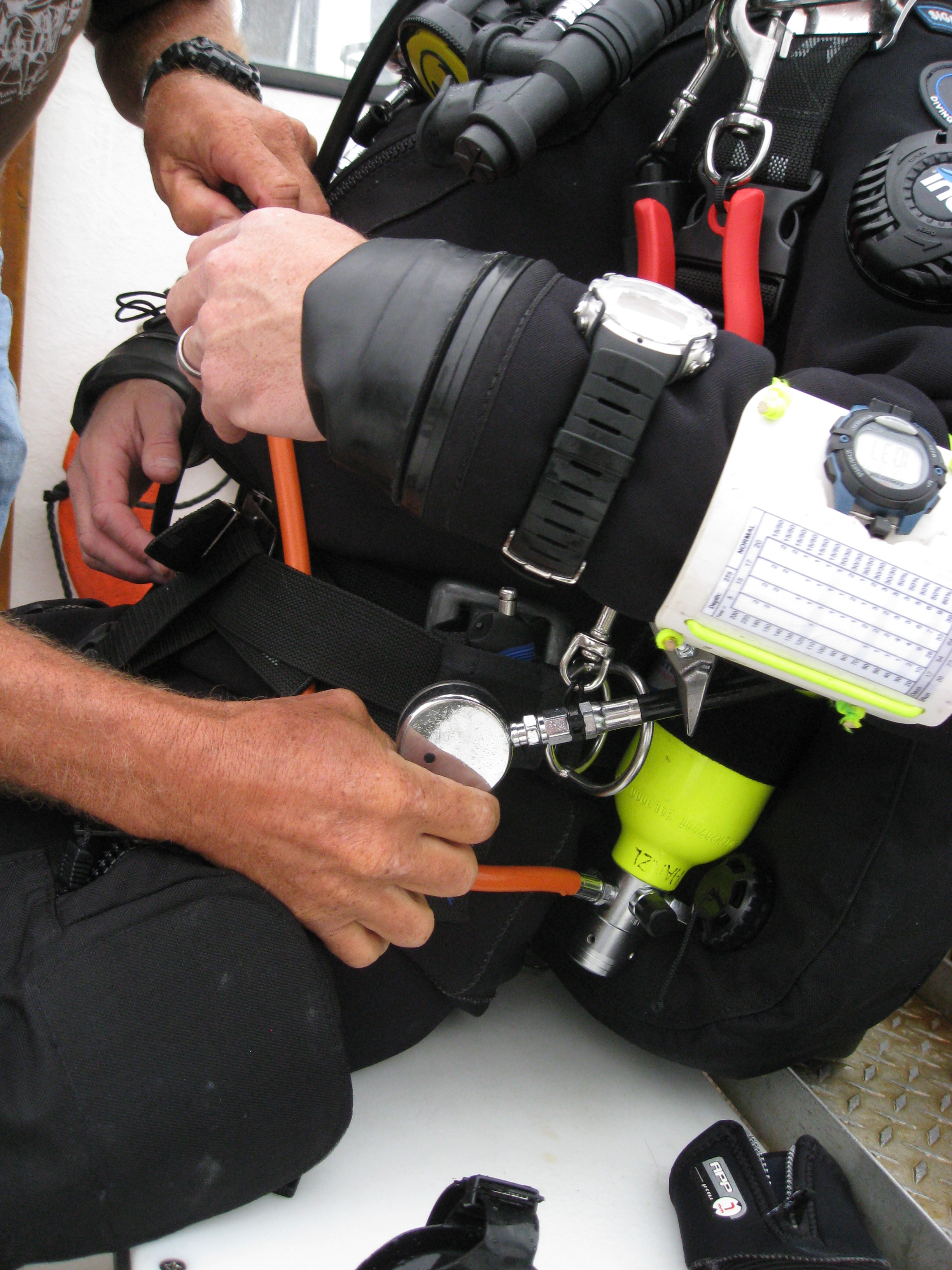
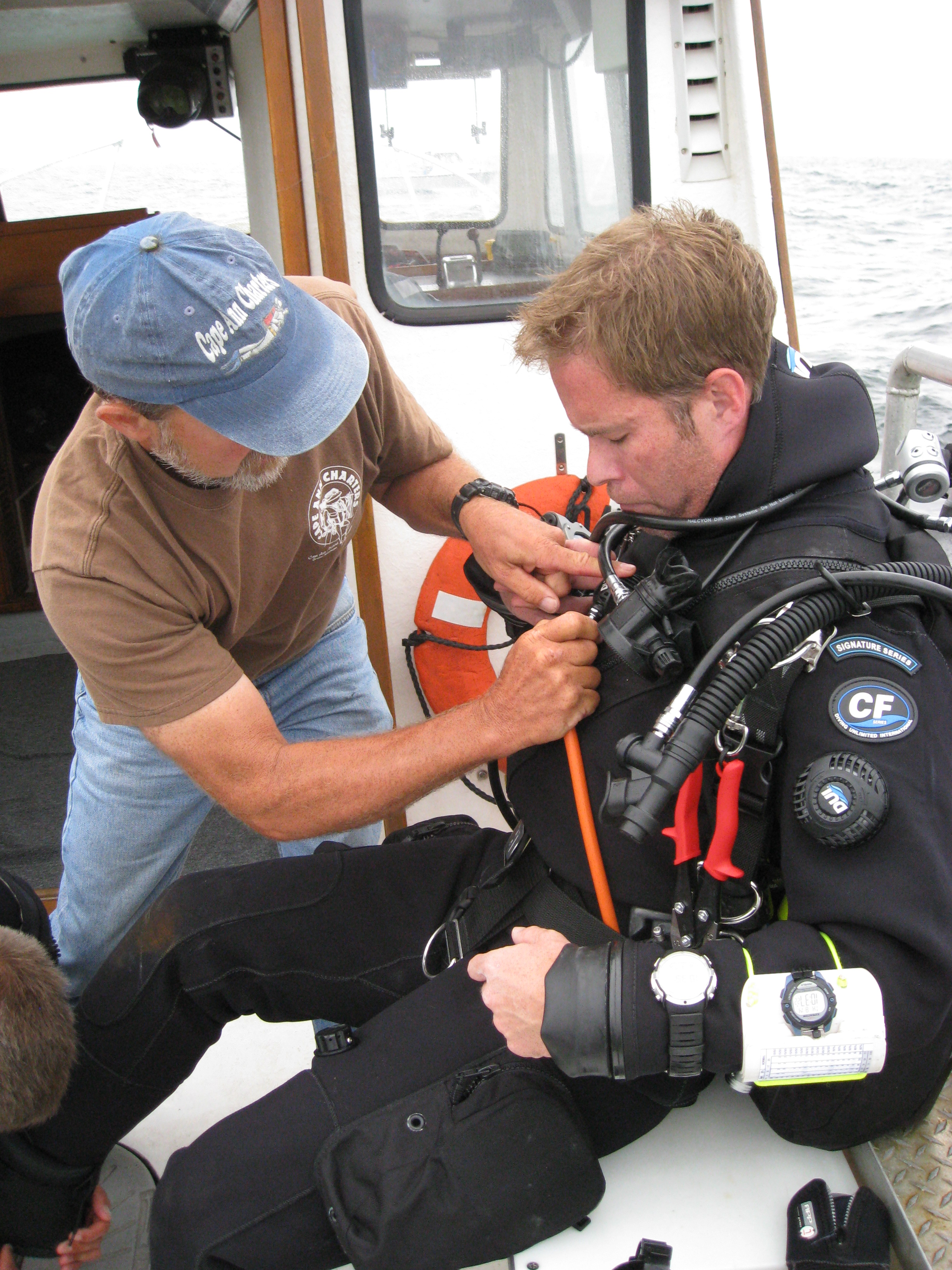
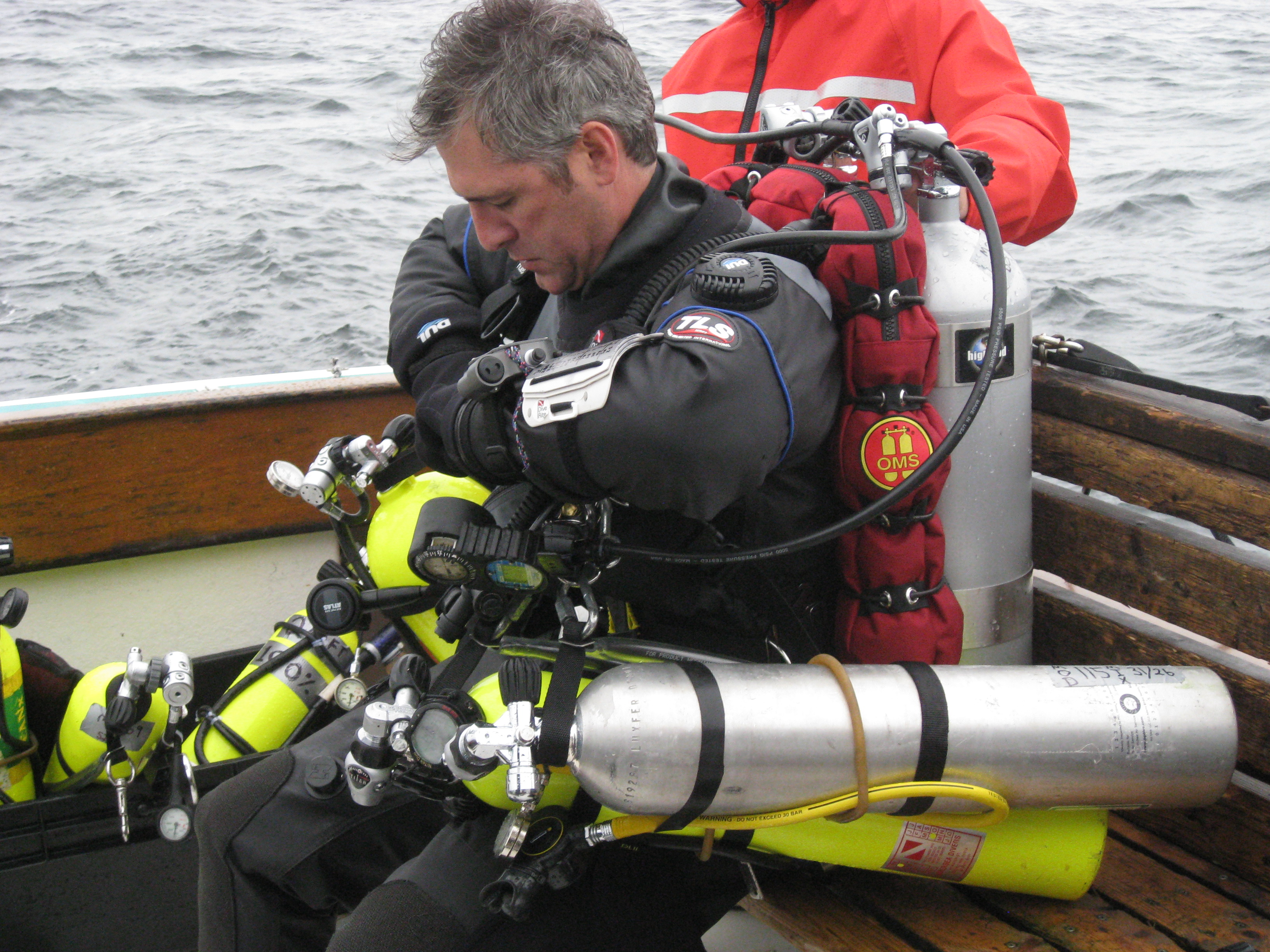
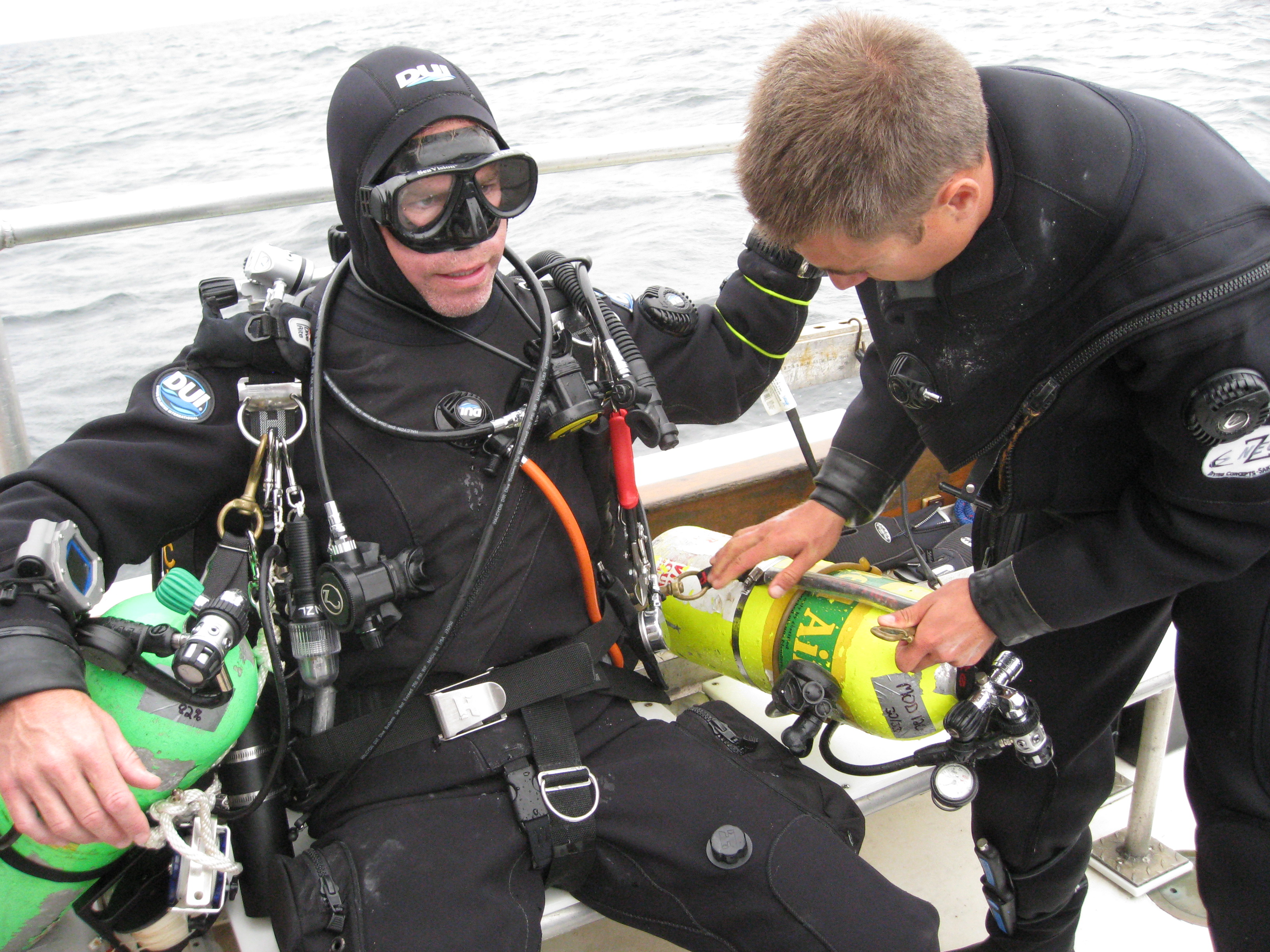
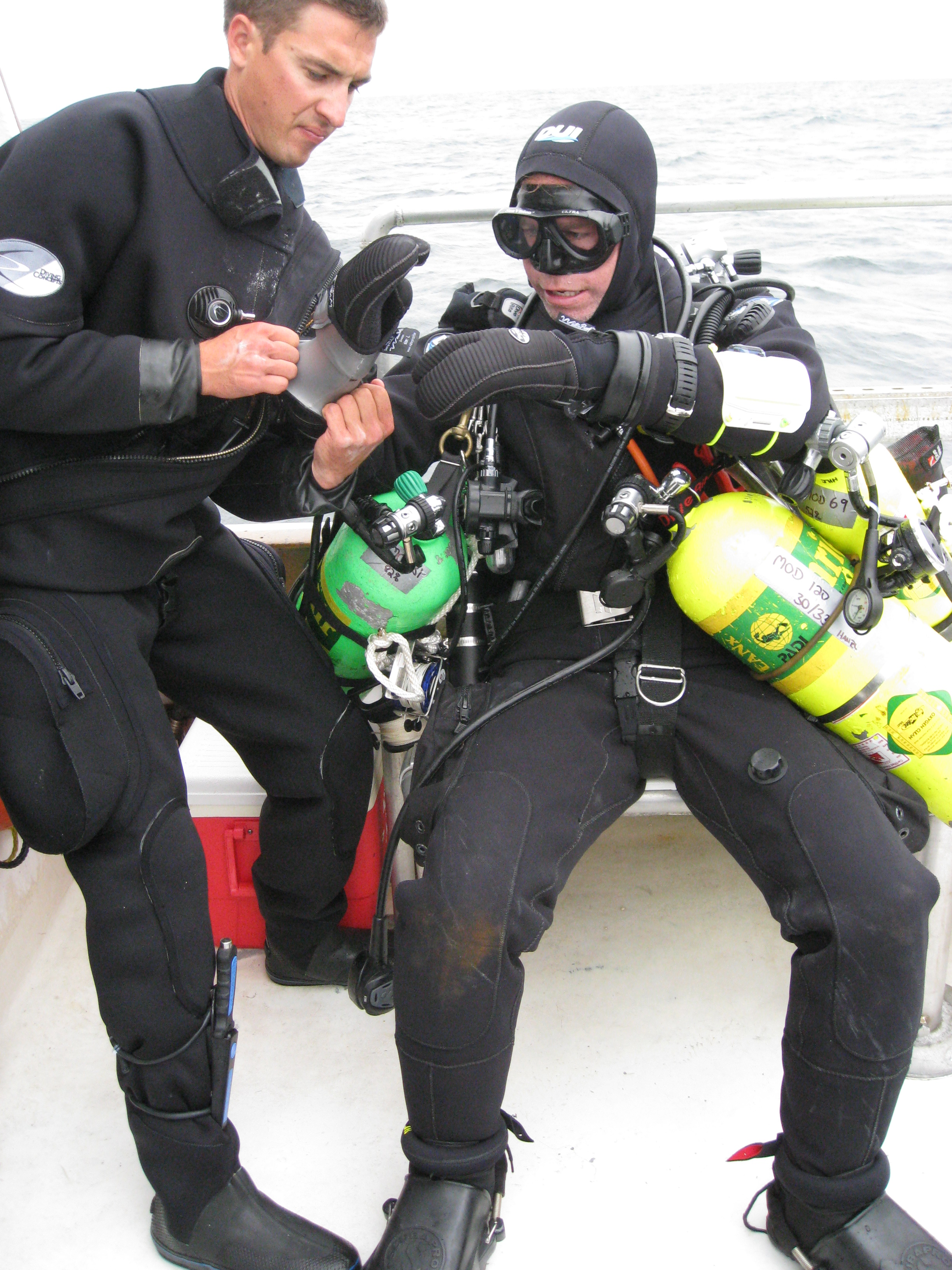
You don’t don this gear like you would with recreational scuba gear, rather you have to climb up inside the harness with it still hooked to the boat. The harness is continuous weave – meaning there’s no quick disconnects to break. If your harness fails then your entire kit, with all your gas (you know, that stuff you’re breathing), falls away from your body and it’s gone. There are tales of this happening to some poor hapless tech divers who paid for the mistake with their lives (my deco computer, when it boots up, says, “Check your wingnuts you idiot!”).
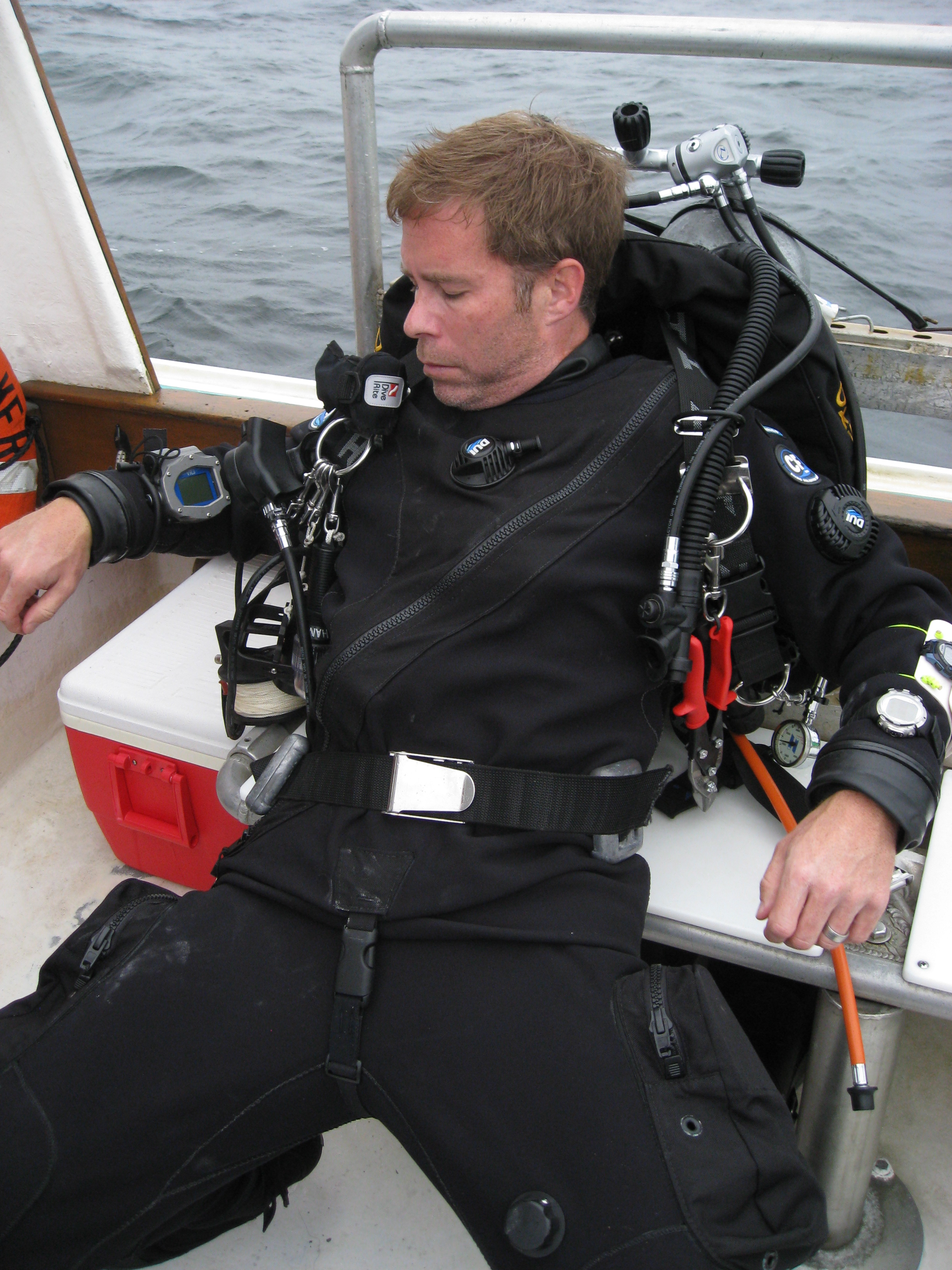
Once in the harness the safety diver (Matt) assists in the rest of the process, including clipping on all the additional deco tanks per my specific config, hose routing, helping get the bulky gloves on, and stuffing my feet into my fins – there’s no way I can reach them once in the harness. It takes a village…
The Dive…
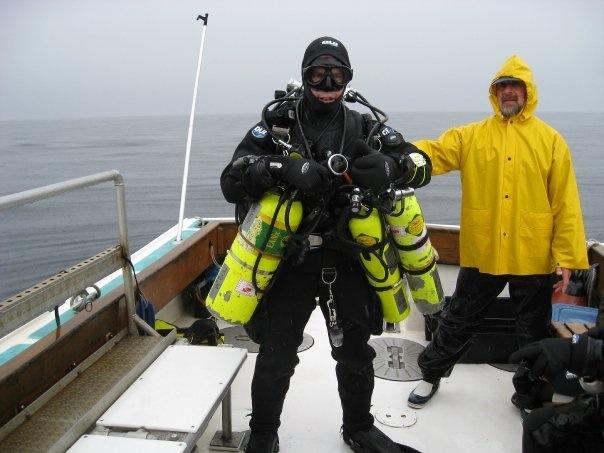
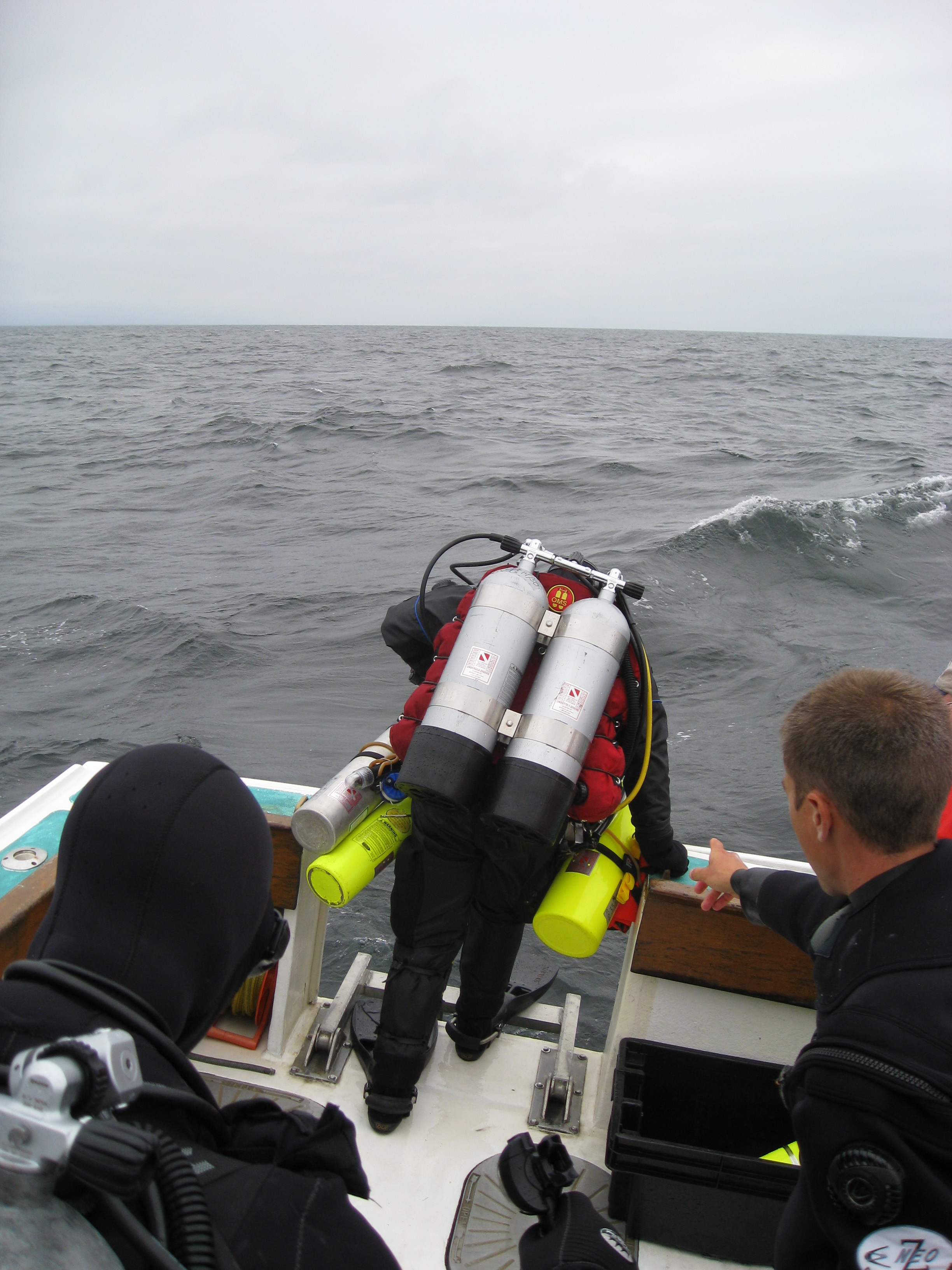
Entering the water with all this kit on is more of a somewhat controlled fall. With Matt’s help I stagger up and shuffle to the stern. As Daybreaker settles into a trough I step off the boat…
With the terrible surface conditions even the entry and surface swim to the ball, with 150lbs of gear trying to drag you under, was a real chore.
Meeting at the float Michael and I immediately descend to our planned stop at 30′, anxious to get away from the surface swells. Collecting ourselves at the stop I notice my dive computer’s backlight is timing out, requiring a button press to light it back up. This can be changed, but when in dive mode it’s a little complicated, and I chose to ignore the issue.
Again – are you counting? The Three Oh Shits are already stacking up.
The clock was now officially ticking and after the S Drills were completed I flash Michael an OK sign and turn down the line. So began the rapid descent into darkness. As I let the increasing pressure around me compress the gas in both my drysuit and the dual bladders of my BCD, my rate of speed rapidly ticks up. This is the part of the dive that you sort of zen out – you begin an automatic circle of activity. Equalize your sinuses, add a burst of gas into the BCD, add another slug into your drysuit to equalize against the squeeze as the increasing pressure compresses the gas in your suit, check your depth and time – then rinse and repeat. All the while the line is whizzing through the circle you make with your thumb and forefinger.
The particulate green murk the dive started in began deepening into a velvety black. There was absolutely nothing to see save for the white line paying though my fingers. The muted thunder of my exhales was my only companion, reminding me of how quickly I was bleeding off the precious lifegiving gas.
My primary light is a big cannister light, the battery pack strapped at my right waist, its umbilical running up to the light head I keep clipped to my right shoulder D ring. Its light forms a fairly narrow beam (8 degrees), deliberately soft at the edges and laser sharp in the center for light signaling. Dangling off the D ring, the downward beam fades into nothingness, save for the white line I’m riding along.
That damn deco computer backlight though. I can’t see the display without tapping a button – and with one hand riding the line (my computer arm) and the other occupied with my circle of activity, I had little bandwidth left for activating the screen. I’d lost some situational awareness, including my depth, and that’s wasn’t good.
(The quiet “oh shits” lingering at the back of my mind were slowly gaining a voice).
It wasn’t long into the descent – perhaps a minute – when I realized my breathing wasn’t normal. I was gasping in large jerky breaths and my head was pounding. But beside the backlight issue everything seemed in order. Still, this wasn’t good – I was keenly aware of the strict gas limits imposed on the 383 cubic feet of gas I was carrying. This consumption rate wasn’t part of the plan. I had to get my breathing under control.
Then a realization hit me with a shock – the line paying through the circle of my fingers was now running against the underside of my forefinger. Meaning – it was no longer running straight down, rather it was travelling at a distinct non-vertical angle.
A heartbeat later and the line was horizontal. The vertical dropline, that ran straight down to the bottom, was now freekin HORIZONTAL! Another rapid heartbeat and the line was tugging at top of my finger, heading UP!
UP???
What was my depth? Where was I in the water column? I had no idea – glancing at my wrist, an action that typically always provided the crucial statistics of my dive, revealed nothing but a dark chunk of metal.
As I struggled to make sense of this, and to get my runaway breathing under control, thoughts were exploding in my head. What if the dropline had caught on one of the massive mile-long anchor rodes from the STL? Was I about to smash head-first into a massive steel link the size of a Mini Cooper? Something was terribly wrong.
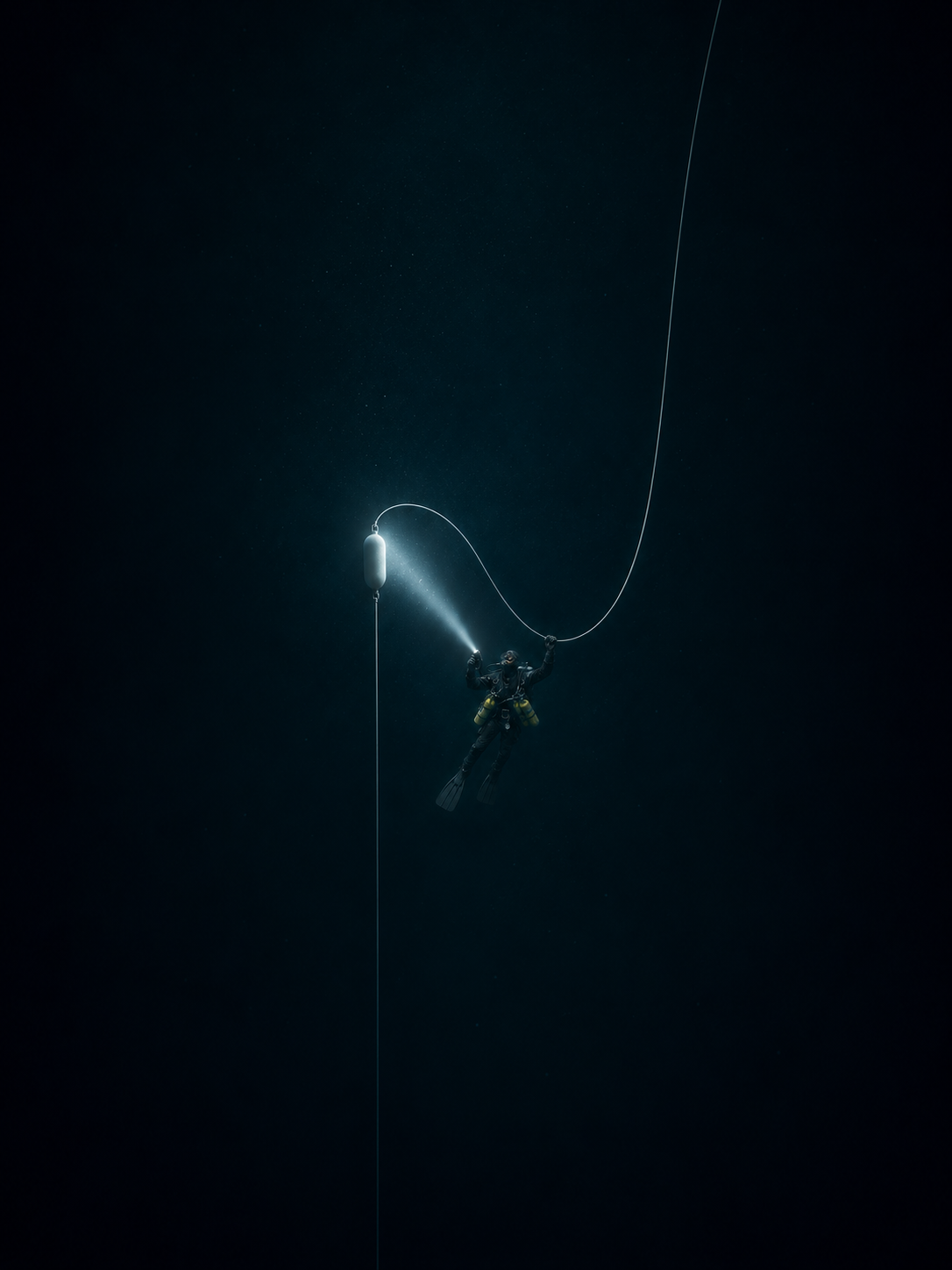
I jammed the brakes on my head-first descent and grabbed the handle of my light head so I could signal up to Michael that I was calling the dive. As the glow of his descending form took shape, I steered my light over towards the descent line, which now formed a U, my fingers at the bottom of it. Just then understanding dawned clear, as clear as the light that revealed the in-line float hovering some feet above my head.
The dropline had formed a sideways S curve, pulled into this shape by a combination of excess line, the weight of the line, and the float pulling the last section of line taught against the anchor. I needed no computer to tell me where I was – I was at 220′, just 60′ off the bottom. Yes!
OBVIOUS NOTE: Stupid me – I didn’t take any pictures during this leisurely dive, so I’m using my friend ChatGPT to help with some visualizations.
I released the light to hang back off its D ring, transferred to the part of the dropline below the float, and quickly descended the remaining 60′ to the anchor. Feathering my descent, I stopped at a hover just a few feet off the silt bottom. With a modified frog kick so as to not to disturb the endless muck, I pivoted in a slow circle and surveyed my surroundings. Without disturbing the sediment drape the visibility was amazingly good and I could look out at the expanse of grey spreading out from the anchor in every direction. An uninterrupted, featureless expanse – an endless monochromatic desert.
The clock was counting – how much extra time did that descent take? I knew it was way more than four minutes. Damn backlight. Damn dropline!
I played my light around the anchor of the dropline, nearly completing a full circle.
Tick, tick. The clock was counting – where was Michael? I had left him maybe a hundred feet above me. He should be here by now.
The light continued its journey. My breathing now back under control.
Featureless grey – depressing grey – nothingness.
Wait – what was that? A flash of red briefly caught the edge of my beam. I swung the light back. Red? The pop-up has red floats attached to it… Red!
The pop-up! There – not thirty feet past the anchor lay the unit. Stunned – I had absolutely no faith we’d actually find the thing and here it was. With just a few frog kicks I could easily swim over and grab it.

I left the line – the object of the mission laying right before me. In a few kicks I crossed the 30′ or so and was there, digging it out of the silt, giddy with excitement.
Then it hit me – I had left the line. The acoustical pop-up in my hands, I was immediately engulfed in an impenetrable cloud of silt.
And I was simultaneously engulfed with a crushing sense of dread.
I had left the line…
OH
SHIT!!
——
To be continued… (again!)


Pingback: A Tale of a Really Bad Dive – Part 3 | john h hanzl (author)